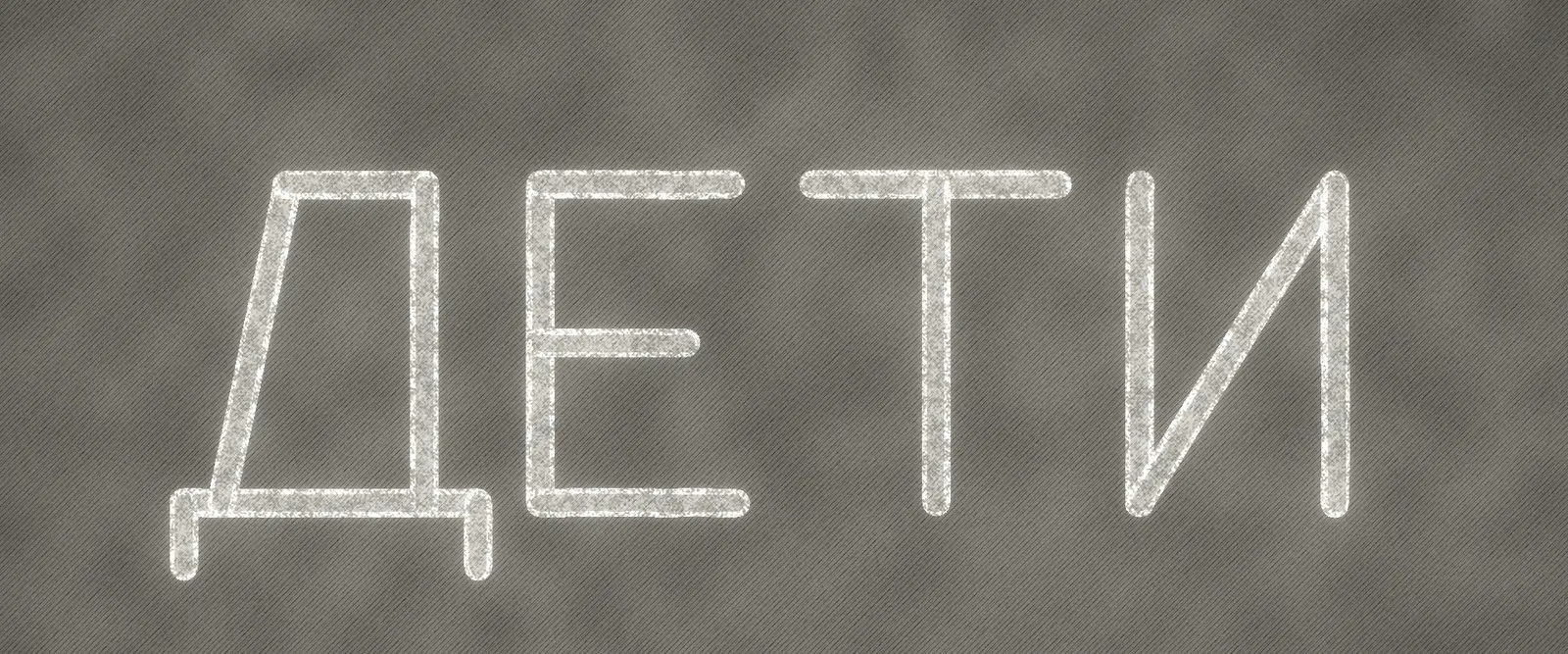
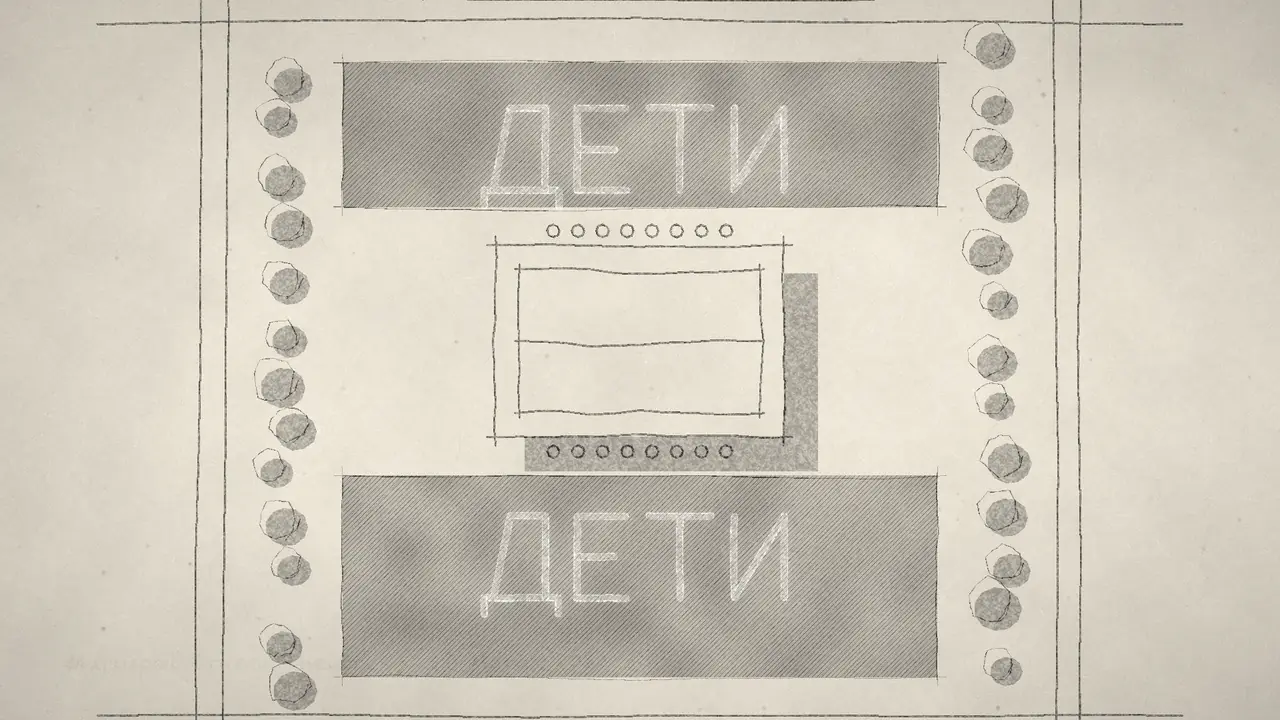
The Russian word ДЕТИ, meaning children, written in chalk on dark pavement, as drawn in the film.
The record behind the song · Big Enough to See

Written big enough

In March 2022, people sheltering in the Mariupol Drama Theatre painted one word on the ground, large enough to be seen in satellite images: ДЕТИ — “children.” Two days later, a Russian airstrike destroyed the theatre. This page lists what each line of the song refers to and where the evidence comes from.

Watch the film 5:04 · YouTube

Scene by scene

Timecodes follow the song. Every person named here is real; their stories were published by their families, by investigators, or by journalists. The film shows no victims — only objects, silhouettes and names.

0:16Verse 1

Bucha, Yablunska Street

Bucha, Kyiv region · 5 March 2022
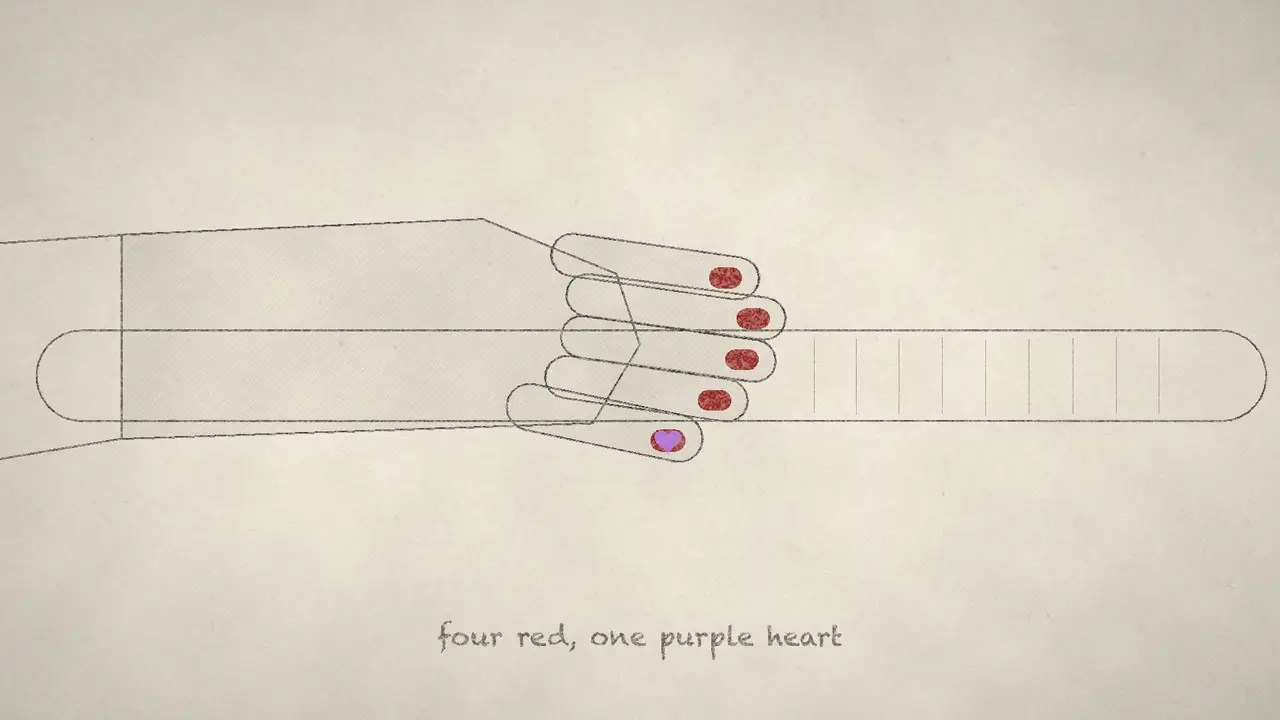
Film still: a hand on a bicycle grip, four nails painted red and one with a small purple heart.

She rode her bike down Yablunska Street, the fifth of March, the frost still on the ground. Four nails red and one small purple heart, that's how they knew her when she was found.

Iryna Filkina, 52, was shot while riding her bicycle during the Russian occupation of Bucha. Her body lay in the street for weeks. She was identified by her manicure: four red nails and one with a small purple heart. The UN documented dozens of unlawful killings of civilians in Bucha; a 150-metre stretch of Yablunska Street alone saw at least 14 people shot.
0:33Verse 1

Andriivka, “going home”

Andriivka, Kyiv region · March 2022

They asked him where he meant to go. He said “home.” That's all. Just “home.”

Oleksiy Cherkovskyi, 31, lived in Andriivka, a village occupied for 34 days. A neighbour told reporters: “The Russians asked him where he was going. He said he was going home. And they took him off somewhere.” He was later found dead.

In the same village, a wounded woman, Liudmyla Kardash, wrote addresses on her hands in marker so that whoever found her would know where to send news of her.

0:47Pre-chorus

A bike, a bag, a pram, a phone

Nobody here was carrying a gun, a bike, a bag, a pram, a phone.

The UN verified the killings of 441 civilians in the Kyiv, Chernihiv and Sumy regions during the first weeks of occupation in 2022. Most were men. Many were shot in their homes, in their yards or on the street.

1:01Chorus

Mariupol, the theatre

Mariupol Drama Theatre · 16 March 2022, about 10:00

Film still: the theatre square seen from above, with ДЕТИ written in chalk on the pavement in front of and behind the building.

So we wrote it on the ground in letters you could see from space: CHILDREN, CHILDREN, white across the square.

Hundreds of civilians were sheltering in the theatre. The word ДЕТИ — Russian for “children” — was painted in huge white letters on the ground in front of and behind the building. Satellite images taken on 14 March show it clearly. Two days later a Russian airstrike destroyed the theatre.

Amnesty International called the strike a clear war crime. The number of dead is disputed: an AP investigation estimated about 600; Amnesty's minimum count was far lower. Across the whole siege of Mariupol, Human Rights Watch estimated at least 8,034 deaths above normal levels, based on cemetery growth seen from satellites.

1:33Verse 2

Vinnytsia, Liza

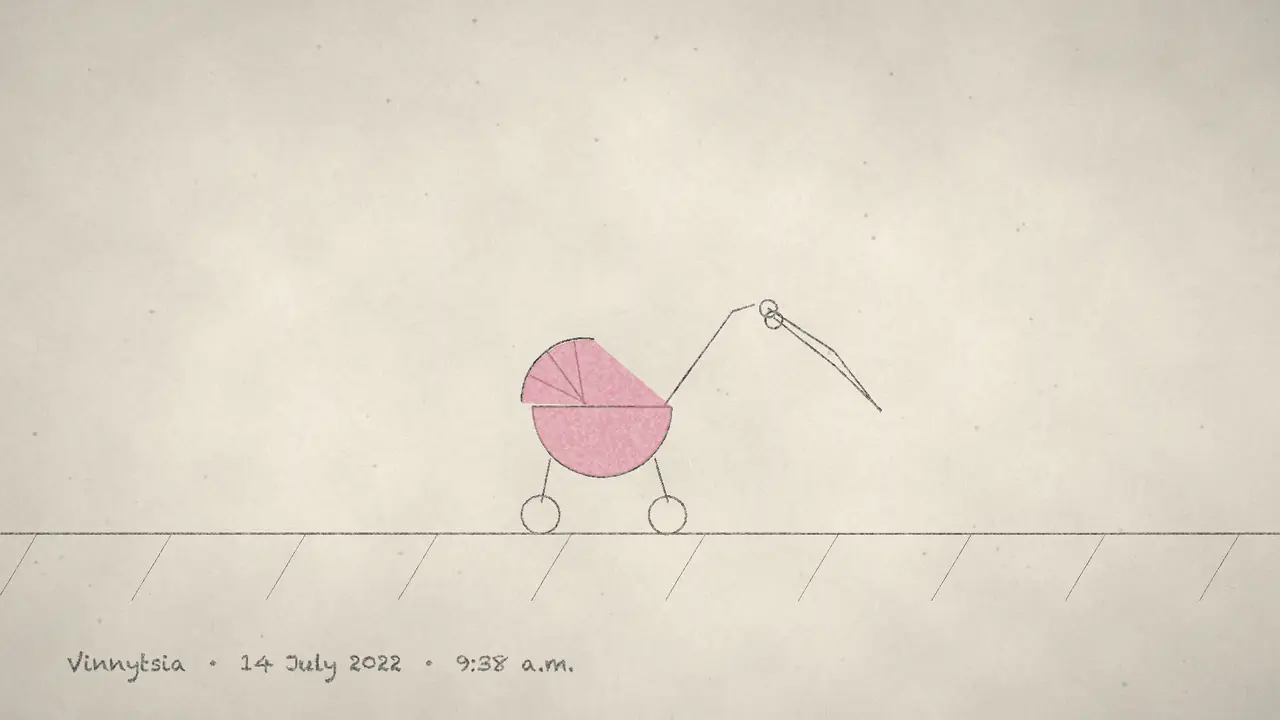
Vinnytsia · 14 July 2022 · 9:38 → about 10:42

Film still: a small pink stroller drawn in pencil on a pavement.

Liza pushed her own pink stroller, four years old, her hands just barely reached. “Where are we going, sweetheart?” “Alla!” She was on her way to learn to speak.

Liza Dmytriieva, 4, had Down syndrome. At 9:38 her mother filmed her pushing her own pink stroller on the way to a speech-therapy class. Asked where they were going, Liza answered “Alla!” About an hour later Russian cruise missiles hit the centre of Vinnytsia. Liza was among at least 27 people killed. Her stroller was found overturned in the street.

1:52Verse 2

Kramatorsk, “for the children”

Kramatorsk railway station · 8 April 2022

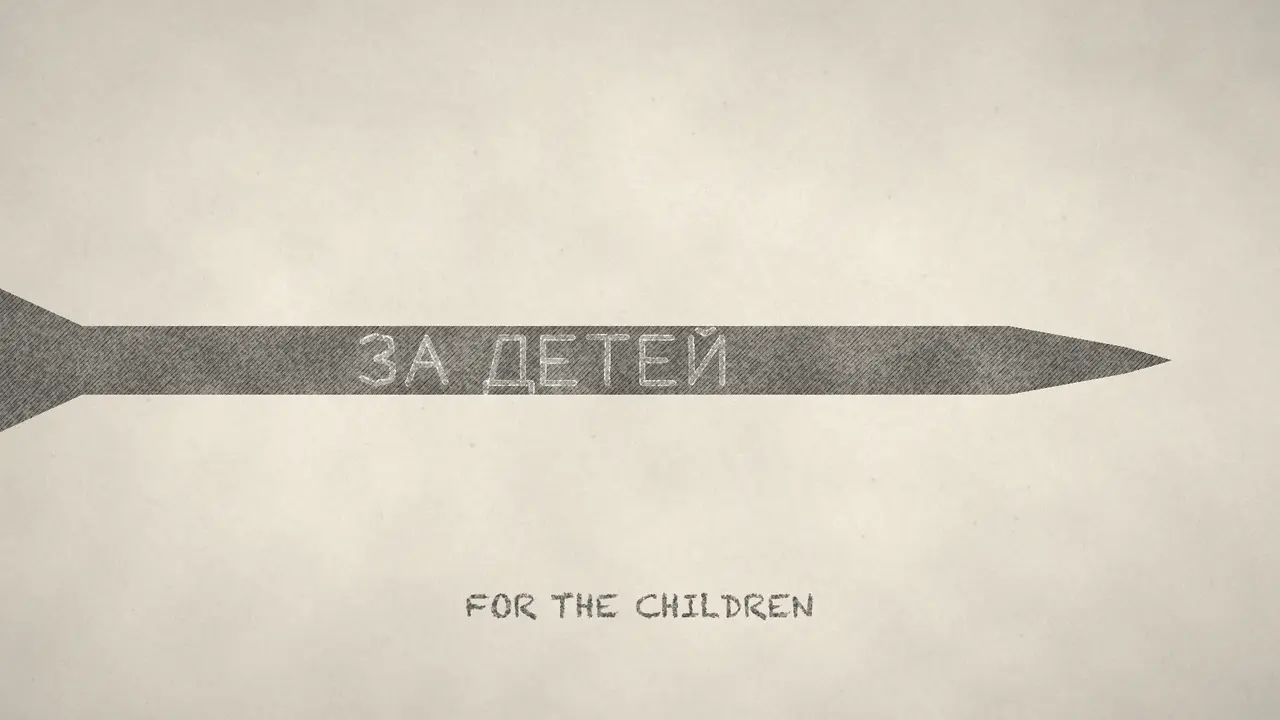
Film still: a grey missile shape with ЗА ДЕТЕЙ written on it in chalk.

And on the missile someone painted, neat and white: FOR THE CHILDREN. The same word we had written on the ground.

Thousands of people, mostly women and children, were waiting at the station for evacuation trains. A Tochka-U missile with a cluster warhead hit the crowd. 63 people were killed, including 9 children, and more than 150 wounded. On the remains of the missile, white letters read “ЗА ДЕТЕЙ” — “for the children.”

2:12Pre-chorus

Yahidne, the basement calendar

Yahidne, Chernihiv region · March 2022

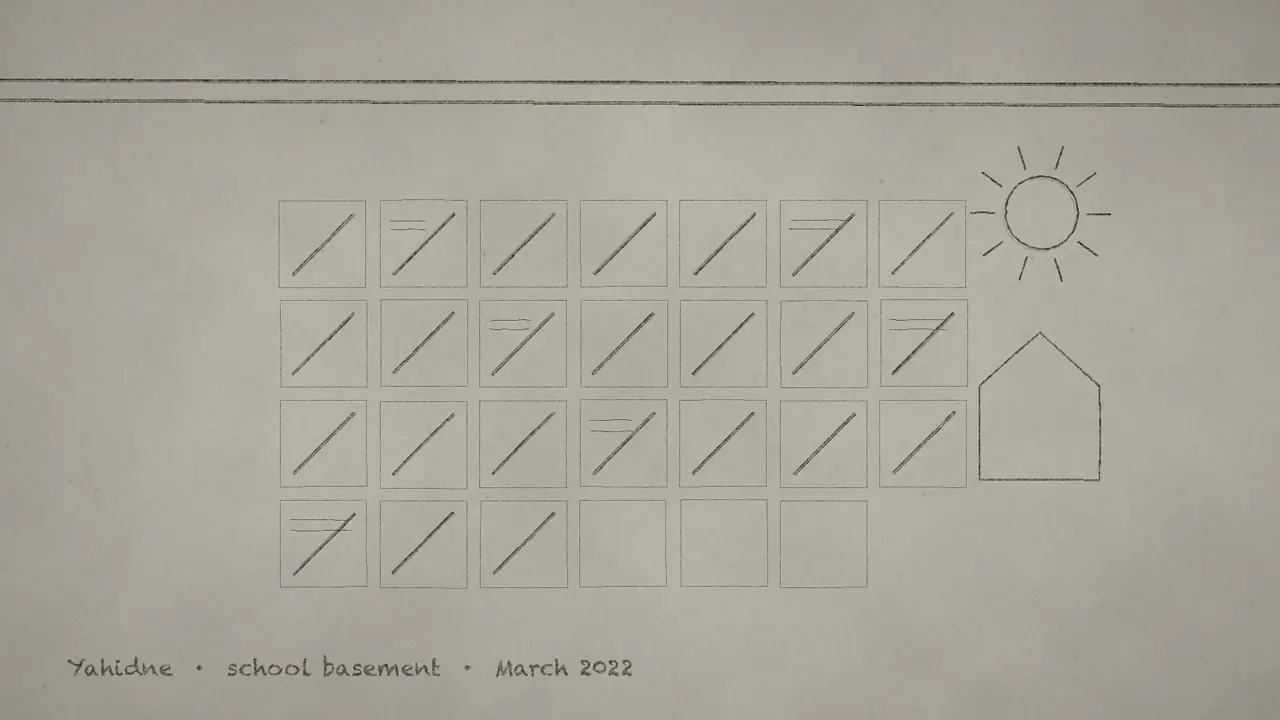
Film still: a calendar drawn in coal on a basement wall, days crossed out, beside a child's drawing of a sun and a house.

In a school basement, twenty-seven days, a woman kept a calendar in coal.

Russian soldiers held about 368 villagers, around 70 of them children, in the basement of the village school for 27 days. There was roughly half a square metre per person. At least ten people died. Valentyna Danylova drew a calendar on the wall with a piece of coal and wrote the names of the dead beside it. She said: “If we were to die, other people will learn how much we endured.”

2:51Bridge

Izium, the diary under the cherry tree

Kapytolivka and Izium, Kharkiv region · 2022 · Kramatorsk · 27 June 2023

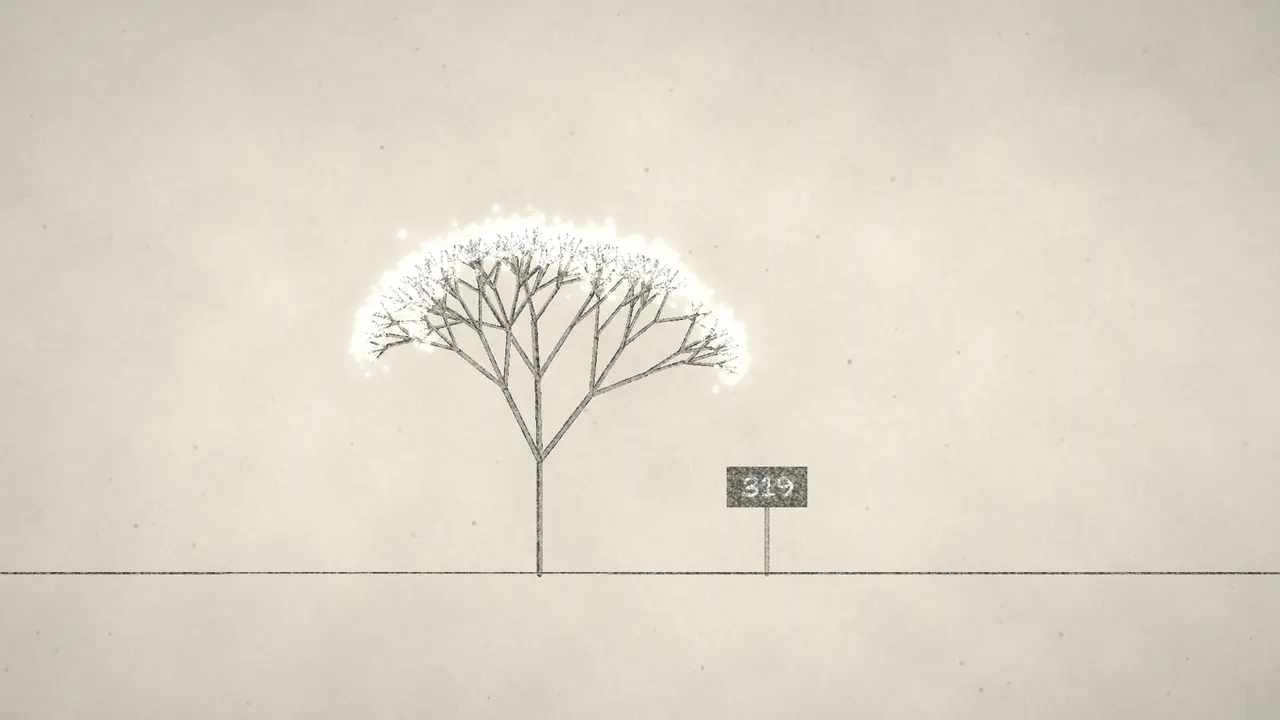
Film still: a cherry tree in blossom, with a small wooden grave marker numbered 319.

A poet buried his diary under a cherry tree. “When ours come, give it to them.” They came. He was in grave three-nineteen.

Volodymyr Vakulenko, a writer of children's books, kept a diary under occupation. He buried it under a cherry tree and asked his father to give it to Ukrainian forces when they returned. He was abducted in March 2022. After the area was liberated, his body was found in the mass burial site at Izium, in grave No. 319. Investigators exhumed 447 bodies there.

Writer Victoria Amelina dug up the diary with his father in September 2022 and had it published. Nine months later she was fatally wounded when a Russian missile hit the Ria Pizza restaurant in Kramatorsk; she died on 1 July 2023. In her foreword to his book she had written: “As long as a writer is read, he's alive.”

3:15Bridge

Viktoriia

Taganrog pre-trial detention centre, Russia · 2023–2024

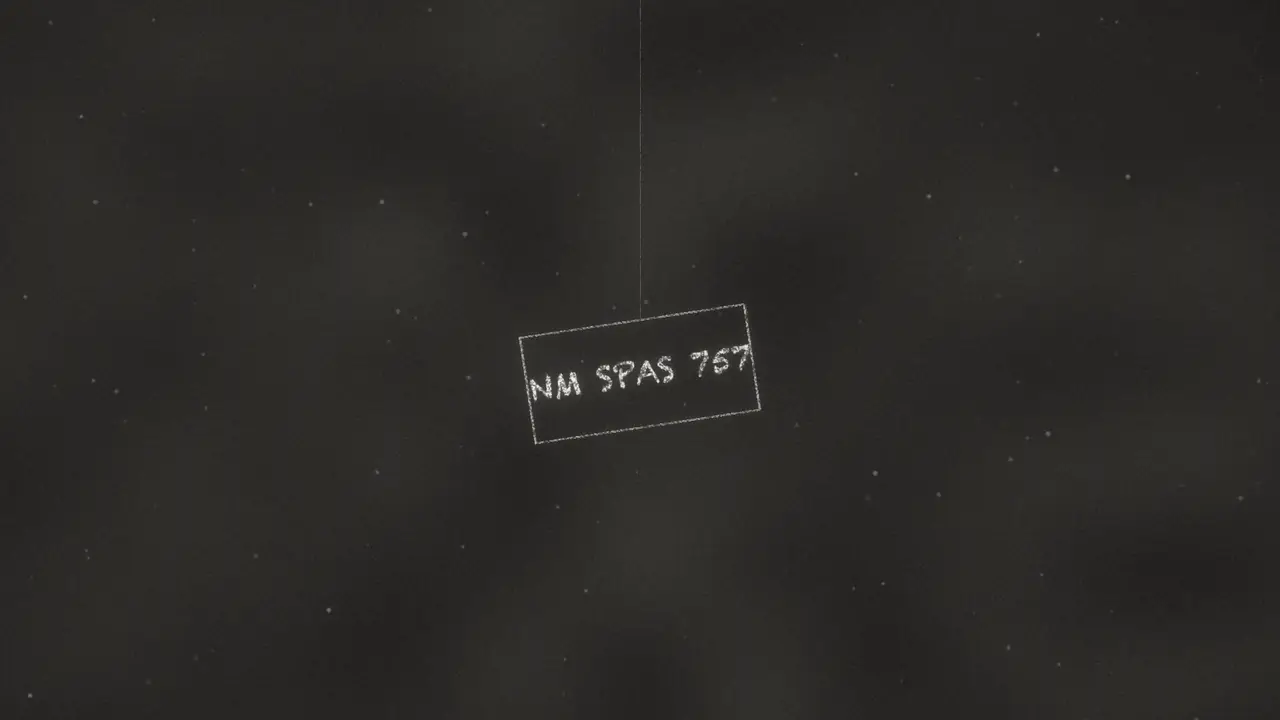
Film still: a hanging tag reading NM SPAS 757, drawn in chalk on black.

A girl of twenty-seven called home from a cell: “Mom, Dad, they promised me I'd be home in September.” She came home without her name.

Viktoriia Roshchyna, a Ukrainian journalist born in 1996, travelled into occupied territory to report on people who had disappeared there. She was detained by Russian forces and reported missing in August 2023. At the end of August 2024 she was allowed one phone call home: “Dad, Mom, I love you! Get ready to meet me. I was promised that I would be home in September.” She died in Russian custody in September 2024, aged 27.

Her body was returned in February 2025 in a bag labelled “NM SPAS 757”: unidentified male. A consortium of 45 journalists led by Forbidden Stories later reported injuries consistent with torture.

3:29Bridge

It's September now

Kyiv · 24–25 September 2026

This film was finished in the last week of September 2026. On the night of 24 September, a Russian attack damaged a maternity hospital in Kyiv; nobody inside was hurt, and a boy was born in its shelter during the strike. The next morning a drone hit a Kyiv apartment and killed 14-year-old Daniel Umansky. Seven people died in Kyiv that day and 57 were injured.

3:35Final chorus

Now you've seen it

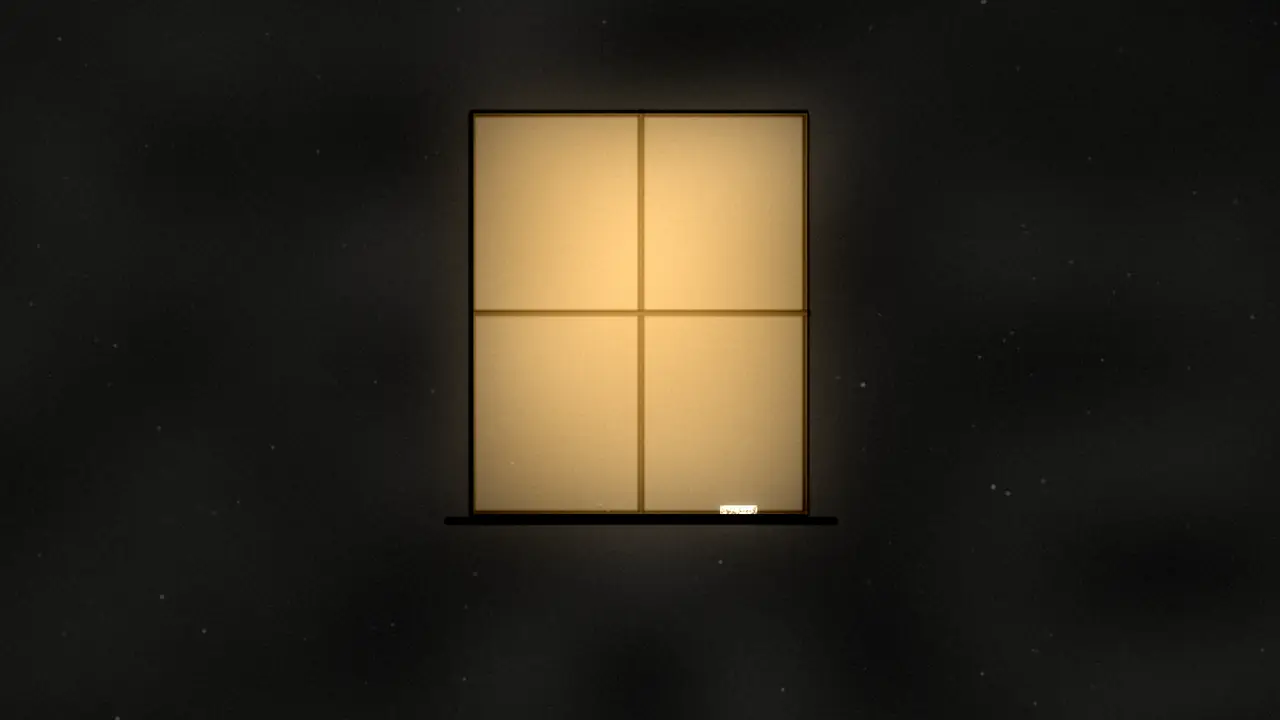
Film still: a lit window in the dark, with a piece of chalk on the sill.

twenty thousand children taken, seventeen thousand lives.

“Twenty thousand children”: Ukraine's official registry lists 20,651 children, each identified by name, who were deported to Russia or forcibly transferred. In March 2026 the UN Commission of Inquiry found that the deportation and forcible transfer of Ukrainian children, and their enforced disappearance, amount to crimes against humanity; 80% of the children in its case sample had not come home.

“Seventeen thousand lives”: the UN has verified at least 16,874 civilians killed from 24 February 2022 to 31 July 2026, and at least 372 more in August 2026. The UN says the real figure is considerably higher.

4:04Outro

Their names

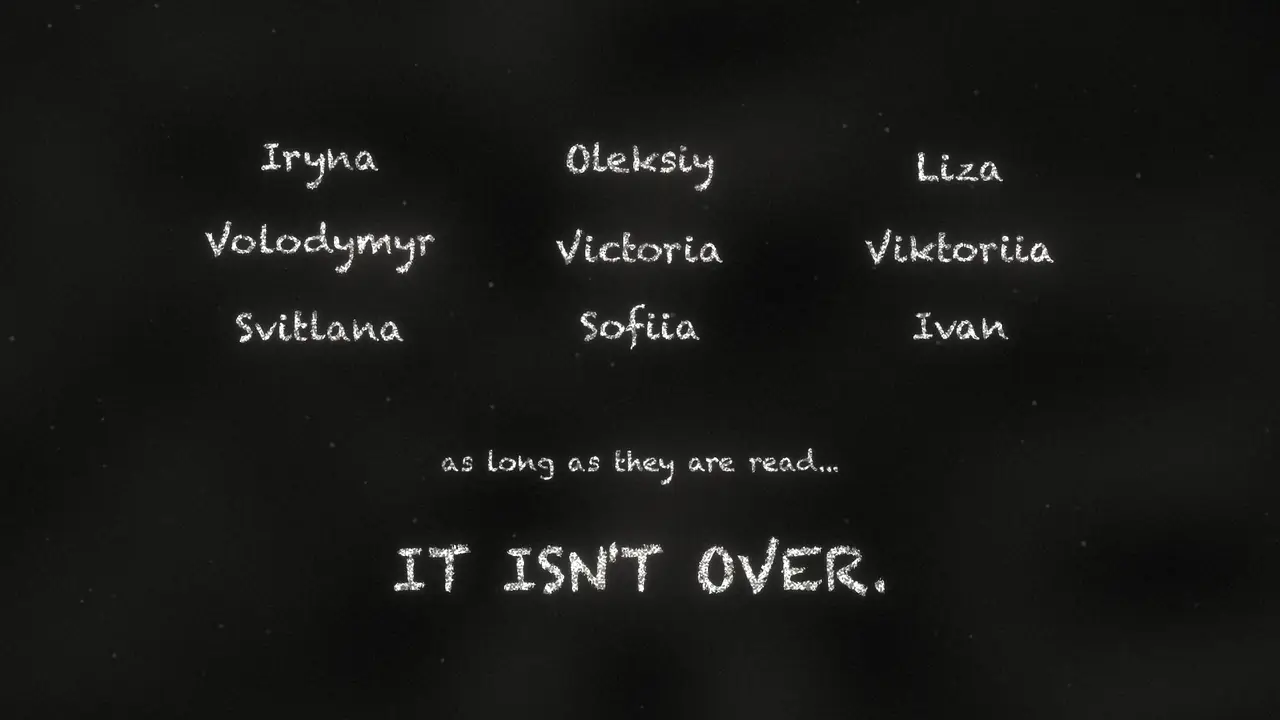
Film still: nine first names written in chalk on black, with the words IT ISN'T OVER beneath.

The outro names nine people. Six appear above. The other three:

Dr Svitlana Lukyanchuk, 30, a doctor at Okhmatdyt, Ukraine's largest children's hospital. When a Russian missile hit it on 8 July 2024, she led children and parents to the shelter and went back to clear more rooms. She was killed in the explosion.

Sofiia Holynska, 6, was killed by a missile in Chernihiv's theatre square on 19 August 2023, the morning she arrived by train with her mother.

Ivan Kozyr, 8, was one of 59 people killed on 5 October 2023 when a missile hit a funeral wake in the village of Hroza. One in six of the village's residents died.

The numbers

UN figures are minimums: they count only cases the UN has verified one by one. Ukrainian government figures are listed separately and labelled as such.

16,874
civilians killed, verified by the UN
UN OHCHR · 24 Feb 2022 – 31 Jul 2026
820
of them children
UN OHCHR · same period
51,273
civilians injured, verified by the UN
UN OHCHR · same period
20,651
children deported or forcibly transferred, identified by name
Ukrainian government registry · Sept 2026
≈13%
of those children have come home
Bring Kids Back UA / Children of War · Sept 2026
2026
Jan–Aug: more civilians killed and injured than in all of 2025
UN OHCHR · Aug 2026 report

The UN Commission of Inquiry has found crimes against humanity in Russia's torture of detainees (2024), enforced disappearances (2025), drone attacks targeting civilians along the Dnipro (2025), and the deportation of children (2026).

Where we were careful

A song compresses. These are the places where it does, and what the record actually says.

“We wrote it”

The theatre inscription was painted by people sheltering there. The song's “we” speaks for civilians collectively, not for a specific author.

The theatre's dead

The count is disputed, from at least a dozen to around 600. The song gives no number for it.

“Alla”

Liza answered “Alla!” when asked where they were going. It is likely, but not confirmed, that Alla was her therapist; the song does not claim it.

“An hour later”

The video was recorded at 9:38; the missiles struck at about 10:42, some 64 minutes later.

“Without her name”

Viktoriia Roshchyna's body bag was labelled “unidentified male”; a tag with her surname was found on her leg. The line refers to the label.

“Seventeen thousand”

Rounded from the UN's verified 16,874 (to July 2026) plus 372 (August 2026).

“Twenty thousand children taken”

Ukraine's registry of named children. Russian officials have said about 700,000 Ukrainian children came to Russia, a figure that appears to include many children who travelled with their families. Independent researchers estimate that the number unlawfully deported or transferred is higher than Ukraine's verified list.

“The same word”

The theatre read ДЕТИ (“children”); the missile read ЗА ДЕТЕЙ (“for the children”), the same word in a different grammatical case.

Genocide

The film does not use the word. International bodies have established war crimes and crimes against humanity; several parliaments have described Russia's actions as genocide, but no international court has ruled on it.

How the film was made

Research first. The song was written after a research file of about 40,000 words on attacks against Ukrainian civilians from 2022 to September 2026, built from UN reports, human-rights organisations and investigative journalism. Every line was then checked against its source a second time before recording, and four lines were corrected.

Music. Generated with Suno, an AI music tool, from the original lyrics.

Animation. Drawn in code, frame by frame, in charcoal, chalk and paper textures. No generative video was used. Timing follows the recorded vocal line by line.

What is not shown. No real victims appear. People are shown as silhouettes, hands, objects and names. Iconic places are drawn, not copied from photographs.

Subtitles. Twelve languages: English, Ukrainian, Polish, Russian, Belarusian, German, Spanish, Hungarian, Georgian, Hindi, Telugu and Chinese. Each translation was reviewed line by line by a second AI model and corrected by hand. Victims' names keep their Ukrainian forms.

What you can do

Share the film together with this page. Support people who help Ukrainian civilians and children. The organisations below focus on humanitarian, child-protection or accountability work, were active in 2026 and publish how they use donations.

Save Ukraine

Finds and brings home children deported to Russia or held in occupied territory.

Voices of Children

Psychological support for children affected by the war.

UNICEF

Ukraine emergency: health, water, schooling and protection for children.

Doctors Without Borders

Emergency medical care, including in Ukraine.

Nova Ukraine

Humanitarian aid to civilians across Ukraine.

Truth Hounds

Documents war crimes for prosecutors and courts. Victoria Amelina worked with them.

Contact your representatives and ask them to support bringing Ukraine's deported children home.